Sunday, May 13, 2012

Pedaling Abu Dhabi


Biking 043
My bike is my new BFF.

Bicycling is a great way to sightsee. You go fast, you go far, and you feel the wind in your face. Plus, it’s always been my favorite form of exercise. So when Mark arrived in Abu Dhabi ahead of me last October, one of the first things I asked him was, “Should I send my bicycle over? Can I ride there?”

“No,” he answered. “You would be killed.” So I left my bike at home in Nevada.

We weren’t here for long before we started asking around and learned that there are two places to ride. Of course the Corniche has a bike path. And there’s Train Yas. On Tuesdays and some Sunday evenings from 6 p.m. to 9 p.m. people walk, run, and bicycle the Yas Marina Circuit Formula 1™ track. How cool is that!

This was enough to motivate us to start looking at bicycles, as I had secret plans to venture out on my own and find some neighborhood routes. There aren’t many bike dealers in the UAE, and after looking around in Abu Dhabi we headed to Wolfi’s Bike Shop in Dubai http://www.wbs.ae/ . This, we could tell from the moment we walked in, is a serious bike shop. In addition to sales and service, they organize road rides around Dubai. Before long Mark was deciding to buy us each a bike.

DSC01697
The bikes will fit better on the Cayenne,
but we haven't tried them there yet.

As a mechanical engineer, Mark is always intrigued by technology and the latest model of anything, and there was this new bike coming out. So we ended up each getting a Scott SUB 10. The bike is belt- instead of chain-driven, with 8 internal gears.


The advantage is that it’s virtually maintenance-free, and very quiet. Also, you don’t have to be rolling to change gears, which I have found to be useful riding here. This isn’t a road racing bike, it’s not a trail bike, nor is it a bike for climbing the Sierra Nevada foothills. It’s a town bike. Here in Abu Dhabi, where it’s flat but we have lots of curbs and speed bumps, it’s perfect.

We ordered the bikes, so it was several weeks before they arrived. Since all of our bicycling gear was at home, we also needed helmets, which are not easy to find here at a reasonable price, especially to fit Mark’s head, and bright colored vests, so that drivers can see us. We went to the historic Deira shopping area in Dubai, where we found helmets and bright yellow workers’ vests much cheaper than at the bike shops. We also needed bicycle gloves, which we bought at Wolfi’s.
Destination Village opening
As usual, our timing was right on.

Our first ride was the Abu Dhabi Marina and Corniche area. We picked a Saturday morning, when it wouldn’t be crowded. Later in the day it gets very crowded and remains that way until late at night – and all night long during Ramadan. It was December 31. We parked at the Marina Mall, and rode to the Volvo Ocean Race Destination Village area, where we had been watching construction progress. As we approached, we realized that we had arrived just in time for the opening ceremony, so we watched the unveiling of the entrance as dignitaries shook hands and posed. Then we rode 7.5km/4.5mi along the Corniche to the Mina Port end, where the fishing dhow fleet ties up, and back, for a total of about 9 miles.


Next we decided to try Train Yas. http://www.yasmarinacircuit.com/en/Events_Detail.aspx?gid=48 .
 
DSC01704
Serious trainers and strollers are equally welcome
at Train Yas.

You drive onto Yas Island, are waved along to the entrance by a series of parking lot attendants or security guards, and park for free. Everyone is in their workout clothes. You flash your Train Yas card for them to scan the bar code or, if you don’t have the card yet, you fill in the form and they give you your free card, to use for each visit from then on. This is how they track who is there; it’s very efficient, especially for here in the UAE. On the way in, you can pick up a free bottle or two of water.


DSC01717
I felt like I was on a movie set.


Inside, it’s a futuristic wonderland. Dance music is playing over the loudspeakers. People are zipping around on bicycles in groups, pairs, or alone. People are running, walking, and strolling with or without children. There are people of all ages, sizes, shapes, and languages.


DSC01719
You can see the LED canopy from the freeway
as you drive by - a night-time landmark.

As darkness falls, the colored LED lights intensify, blinking and changing from purple, to blue, to green, and to red. On your way around the track, you breeze past the sheiks’ luxury yachts in the Yas Marina and cruise under the LED canopy as you circle the Yas Viceroy Hotel.


The entire F1 track is 5.55km/3.4 mi but can be split into two shorter configurations of 3.15km/1.9 mi and 2.36km/1.46 mi. The first time we went we were on a short track at first, and we could see race cars on the other side. Later on, they opened up the whole track.


DSC01720
I was so happy to be riding, until  . . .

Unfortunately, that night my brand-new bike started to make a weird clicking noise. We took it back to Wolfi’s, where it underwent extensive trial and error troubleshooting. Long story short, there was a problem in the gear box and it wasn’t until two months later that I finally got my bike back, with almost every component replaced except the wheels. Of course, everything had to be shipped over from the U.S. Meanwhile, I missed out on weeks of nice cool riding weather.


DSC02004
Lucy loves walking -- she did the
Susan G. Komen last year.


It just wasn’t the same, walking the circuit at Yas while Mark rode his bike – even though I did have Tom, Lucy, Deb, and Dana for company.
 
 
I finally have my bike back, and I’ve been venturing out on the streets of Abu Dhabi. Driving here has been great preparation for bike riding. On my bicycle, I think like a driver. This makes me different than the other bicycle riders I see, who wobble along on the wrong side of the road in their traditional loose fitting pants and tunics.


Pedal-Paddle
Shorter rides are pink and blue. Next post, you will find out more about that red line.

 
So far I’ve taken two big rides; they are in yellow and green on the map.

The first ride was the most ambitious.The yellow line generally shows my route to Bateen Beach, at the west end of 19th Street, aka Al Saada Street. It took me over one hour to ride to the beach, and much of the time was riding the sidewalks on busy 2nd Street, aka Airport Road, on my way to 19th.

Ever since I first arrived, I had looked at 19th Street as a possible bicycling route. It’s a wide boulevard strewn with fountains and lined with pedestrian walkways, perfect for a bicycle ride. At least that’s the impression you get, until you try it. The reality is, the walkways go for a while and then end abruptly in sand, parking lots, or debris piles. Some curbs have ramps, others don’t. Other hazards include cars making right turns into parking entrances or side streets . . . and there is just lots of traffic on 19th.
Bateen Beach 018
The Bateen Bridge is still under construction. Wonder when I'll be able to ride it?

 
Side streets! That’s the ticket! On the way home, I took a different route. Splitting the difference, I opted to ride along 30th, which is basically a freeway, until I found a pedestrian underpass near the Capital Gate building. Then it was neighborhood streets all the way. Almost.
 
There is no way to stay on all small streets here, so you have to be prepared to ride the bigger roads, at least to crossing areas. Traffic comes in waves; it’s all or nothing. So, I wait for nothing. Then I ride like hell to the crosswalk or turn that’s my next goal. It’s a process of winding through neighborhoods, or sections. You never know exactly where you will come out, but fortunately there are lots of landmarks: tall buildings, mosques (if you can tell one from another,) main roads, and the corniche. Plus, the sun is always out, so if you know what time it is you know the direction you are headed in.

Biking 029
The Capital Gate is a landmark,
for sure.
If this doesn’t sound like any fun, consider this. I really feel like I’m getting to know the city. An American woman riding through the streets of Abu Dhabi in padded bicycle shorts and a fluorescent yellow shirt, with a camera and a bottle of water. I have my cell phone, my Emirates ID, and a few dirhams just in case I break down and need a taxi home.

Of course, I have my trusty little Sony camera. I am riding past schools, embassies, Emirati government buildings, expat compounds, Emirati houses. I see women in abayas walking in their neighborhoods, I see and hear children in the schoolyards, I dodge delivery trucks (or they dodge me), I pass construction projects, men coming and going at the mosques, police investigating some invisible incident.


Biking 033
Home sweet home?


I see workers everywhere. When I smile and say hello, nearly everyone smiles back. The workers usually smile shyly and nod politely. Their vehicles are often decorated, like a home away from home.


Biking 031
Ladies' prayer halls have a different appearance
from mosques, which generally have domes.

Ladies have separate prayer halls, because women and men don’t pray together. Too awkward, all that standing shoulder to shoulder, kneeling and bowing down. Plus, women have many responsibilities with the home and children, so they don’t go out to pray that often. They pray at home.


Bicycling 003
I love this retaining wall evoking the Arabian sand dunes.
Zayed Bridge is in the background.


My favorite ride so far takes me along a road parallel to busy Al Salaam Road. I ride to the base of the Zayed and Maqtaa Bridges, past the historic Al Maqtaa Fort, and around to the Zayed Mosque area.
 

Biking 035
Al Maqtaa Fort is my idea of history.


There is almost no traffic to contend with – except the morning there was an accident a few miles away, and the traffic was frantic, whipping through the traffic circle that I ride through to get to my route and speeding and passing on the two-lane frontage road. Cars were coming at me head-on, which made me wobble a bit; I felt like one of those Pakistanis. I just hope that was a very unusual occurrence.


Biking 048
The future Ladies Club is . . . futuristic.


If I keep going, I can go underneath the Musaffah Bridge and around to the Armed Forces Officers’ Club area. There is lots of good traffic-free riding there, and I discovered the construction site of the new Abu Dhabi Ladies’ Club, right next to the Officers’ Club. Like everything else here, its architecture is over the top.


Biking 047
Add caption


The beach looks like it will be huge. I wonder if we will still be here when it’s finished?


I saw an amazing collection of public art sculptures. I wonder where they’re going? The Ladies’ Club, perhaps?


Biking 039
Remember those driftwood sculptures that used to be on the shoreline on the Emeryville mudflats,
near San Francisco? Somehow this made me think of those.


Biking 010
Public entrance to the mosque.

Now I head back toward home, riding through the traffic circle onto the overpass over 30th, and back into the Zayed Mosque area, which I am completely fascinated with. I can’t stop taking photos.


I admit it. I am becoming obsessed with this amazing mosque.


Biking 001
When I see this building I know I'm almost home.


There is architectural eye candy at every turn. I am constantly stopping to snap photos. This landmark building next to the freeway is on the UAE’s media and entertainment campus, named after the geographical coordinates. 
http://twofour54.com/en
Biking 053
I wouldn't mind living in one of these.


Biking 022
I love the wave design of the Rocco Forte.
I have toured the inside. Spectacular!

I head home by way of Al Noor Hospital and the recently completed landmark Rocco Forte Hotel, where I cross busy Airport Road at the light. This is probably the worst place for traffic because I have to ride in the street on Airport Road from the traffic light past the very busy petrol station, where cars typically careen across several lanes to line up for gas. Yikes! Fortunately it’s only about a hundred meters, then I veer off onto the access road to Al Bateen Airport and wind my way home through the neighborhoods.


Biking 008
There isn't much shade, and I always
make sure I drink my water.

These days I ride early in the morning, because by 10:00 it’s just too hot. I don’t even know how much longer I will be able to ride at all, as I am told that it gets to the point where it never cools down. Good thing I don’t mind the heat. It reminds me of how I used to bask in the steamy Michigan summers, knowing that it would end and winter snow would come back.


I know my adventure here will end sometime, for me, for good. So I am soaking up everything while I can, even the heat. When I get home from a long ride and I can feel the heat radiating from my face, I suit up and go for a swim. The water is lukewarm, but still refreshing, and in the most intense heat of summer they will cool the water.
 
Zayed Mosque & Swimming 048 (2)
Ahhhhhh.

 
It’s not a bad way to spend the morning.


Biking 007

 By the way, I have thought of a name for my bicycle. Can you guess what it is?
First person to guess correctly gets a box of Zadina dates or Arab sweets!

Thanks for reading. And wherever you are, stay as safe as can be.

Next up: PADDLING!

Tuesday, May 1, 2012

Eastern Mangrove Kayak Trip


kayak trip 012

The mangroves fascinate me. Perhaps it’s because I haven’t gotten a chance to explore them. Part of the reason for that is that they are, by nature, inaccessible. They sit tantalizingly close to shore, but in tidal zones that are either inundated or too mucky to walk in. They look like a dusty green mass, but I know there’s a lot of living going on in these mangal communities, which is the name for the mangrove habitat. Birds, fish, and insects are feeding and breeding. I wanted to get in there and see it.

Fortunately, there are watersports companies that run kayaking trips, and the six of us – Lucy and Tom, Dana and Deb, and Mark and me – booked one.

Kayak trip
You can see how close we live to the most important mangroves in Abu Dhabi. I want to see more.

The Eastern Mangroves are a protected natural area planned to become Eastern Lagoon Mangrove National Park, the UAE’s first national park, sometime in the future. Meanwhile, a large development, designed to be “compatible” with the natural habitat, is undergoing construction there which includes a 5-star hotel and spa, residential apartments, and a marina. The launch site is at the edge of the construction site, five minutes from our apartment.


kayak trip 004
This is a great place to launch
a paddleboard, as well.


Our tour was scheduled for 9:00 a.m. Friday, so the construction site was quiet – Friday morning is prayer time. After our brief safety talk and introduction to the mangroves – they provide wildlife habitat and help protect and stabilize the shore – we set out.


kayak trip 055

Our paddle would last two hours. Mark and I took a double, as did Dana and Deb, while Lucy and Tom took singles. Deb had been tentative about the trip, because she hadn’t ever been on a kayak and didn’t know what to expect. But seeing the sit-on boats and the benign conditions, she relaxed immediately.


kayak trip 013
The mangrove roots protrude out of the soil
and can be seen at low tide.

kayak trip 019
Lucy and Deb were a little creeped out
by the critters skittering underfoot.

Our guide told us that we would be paddling for a while, and then we would have a chance to get out of the kayaks and explore. Although I had somehow imagined that we would go further than we did, I enjoyed being able to get out of the kayak and walk among the mangroves. We saw little blue-shelled shore crabs skittering away as we approached, and egrets landed as we paddled on.


kayak trip 034
Goosh. Not too bad.

Next we paddled to a sand bar, where we were warned not to lose our flip flops in the sticky mud, into which we might sink up to our calves. Instead, we took them off and squished our feet into the muddy sand, which was grey under the surface. One reason why the mangroves are so important is that they stabilize heavy metals that precipitate out of sea water. If the mangroves are removed, these metals are disturbed and can contaminate surrounding habitats.
 

As usual, a curious kid caught my attention.
We swam in the salty, buoyant water and saw a few Greater Flamingoes off in the distance. We saw little fish swimming in the water. We found some cool shells. I talked to a little girl about Kailyn’s age and her and her parents.


All too soon it was over, and time to go home. But we weren’t too sad, because we were looking forward to the evening, and the American Women’s Network Beach Party at the fabulous Fairmont Bab Al Bahr hotel.

The kayaking was the perfect way to start the day,
but the beach party was the perfect ending.

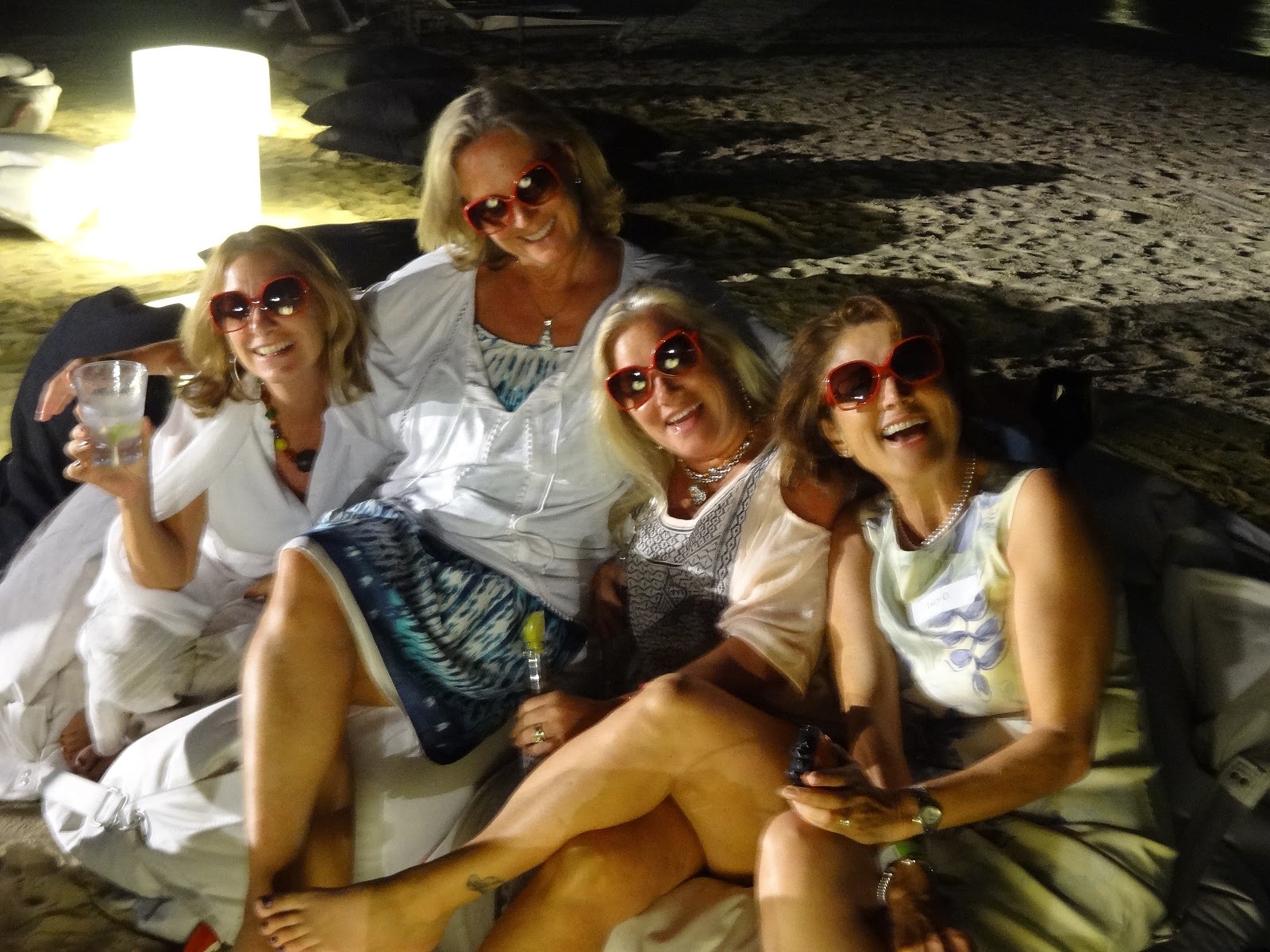
Tom Dana Mark AWN FB
Who has the biggest sunglasses?


  The kayak trip has just whetted my appetite for more mangrove excursions, and I am now noticing even small mangal communities on my bicycle rides. Mangroves are so important here, because unlike most of the UAE’s vegetation it’s native, and adapted to the anoxic soil, briny water, and tidal fluctuations.

Fortunately I have my stand-up paddleboard, and there is a group here that organizes paddles. This weekend, on May 5th, there is a Full Moon Mangrove SUP social at the Eastern Mangroves. We only have one board, but Mark will be on a quick trip home to the states. Perfect, I’ll get to meet some other paddlers and hang out under the full moon while Mark is home visiting for Mother’s Day.

I’ll update this post with a few photos of that trip, inshallah.

Abu Dhabi Wildlife Centre – Lions and Tigers …


Wildlife 206
Not long ago, this lion was a small cub.

Imagine a lush courtyard behind walls. Several fountains and ponds beneath the shade of flowering tree branches keep a slight breeze flowing. Inside the thick concrete walls of the air conditioned house, you walk on cool stone tiles with bare feet. The newest member of the family, a lion cub just a few weeks old, jumps off a plush upholstered lounge chair and approaches you. She nuzzles your ankle. The cub was expensive to import but your children wanted the exotic pet, and how could you say no? You scratch her behind the ears and she bats playfully at your fingers.


Just months later, your lion cub has grown to nearly two hundred pounds and is almost adult size. You are having difficulty getting enough meat to feed her; she eats 15 pounds of raw chicken or beef each day. You can afford it but still it bothers you, the money and trouble to obtain and freeze the meat, then defrost it each day. It takes up much of the servants’ time.


Wildlife 199The lion needs medical care, but there is no veterinarian for exotic pets nearby, and you can’t transport her without a large vehicle and cage. She has sprayed and damaged the furniture, so she must now remain outside in the courtyard. Because she might escape, you chain her to a tree. She’s used to you and the rest of the family, but she has begun to act more aggressive around the smaller children. You are getting uncomfortable with this, so you move her to a more isolated place in the yard, a corner where there is less shelter and the heat is more intense. She spends her time alone. Her health is deteriorating.


27548_112782432079546_8336_nThis hardly seems possible but it is a reality that the Abu Dhabi Wildlife Centre confronts each day. When I heard about the ADWC I looked on their Facebook page and saw a photo of an adorable lion cub, with a comment underneath it that said, “I would love to have one of those sitting on the edge of my bed!” The next comment said, “There are too many of these out there already.” Obviously, there are people who need to be educated about the realities of keeping wild and exotic animals as pets.


Just in case you need more specific examples, read these comments on a UAE community blog announcing the Centre’s move to its present location in July, 2008:

IYM said... Oh great… I'm totally in love with wild life! Tigers…give me a small one as my birthday gift please…

Sheikha M. said ... no, the animals stay at the center. The word they are trying to put out there is that these animals are NOT pets, as many high net people get them as pets, then don't take care of them. Last year, 2 very young lion cubs came in, they looked like skeletons with hide stretched over them. The female was very aggressive when being bottle fed, so the help just stopped feeding them. Fortunately the owner was "convinced" to give them up to ADWC and now they are doing great and are almost a year old.

 
Baboons
Monkeys are an ever-popular pet
among the  privileged.

It’s estimated that there are 3,000 exotic animals in Abu Dhabi in need of rescue. The Abu Dhabi Wildlife Center began as a conservation program for large carnivores. In 2008, it expanded its mission to become a sanctuary and orphanage for sick and confiscated animals.


Paparazzi photographing baboons
Paparazzi


I went to ADWC with a group of six including Lucy, Linda, Laura, Jenn and Sara. We met our guide Steve at a petrol station and he led us caravan-style to the Center, which is down a dirt road off the Al Ain truck road south of Abu Dhabi.


You can see the large enclosures in this aerial photo.
I recognized the road, because it was the same one that I drove on with Oscar and Dave to meet our birding group at the Al Wathba Wetland Preserve. That day, I had noticed what looked like cages among the vegetation and, not knowing anything about the Center, wondered if perhaps it was a plant nursery of some kind. Now I know what I was seeing. How the pieces of this jigsaw puzzle of a city are fitting together!


Caracal
The caracal has tufted ears.
It was 9:00 a.m. and already quite warm when we arrived. We started the tour out on foot and walked to a group of cages. My favorite and most memorable animal here was the caracal, with a distinctive elongated and tufted ear. Once considered to be a member of the lynx family, it is also known as Persian Lynx, Egyptian Lynx, or African Lynx.

This animal is fascinatingly beautiful but also fiercely territorial. It’s not a species of concern for conservation, and in fact in some places they are considered a nuisance, much like the coyote in the U.S., and are hunted by farmers and ranchers. In fact, the shooting club in Abu Dhabi is named after the caracal.


Steve and Laura discuss animal rescues
How does an animal come to the Center, asked Laura? Steve answered that sometimes people report an animal that they know is being abused or has become a nuisance and it’s confiscated. Other times the owner will call the Center when it gets too large or expensive to feed.

“So . . .” someone in our group said, “if I know of a panther, should I tell you?” “Yes,” Steve said.

“There’s one in my neighborhood," our companion said. "I’ve seen it when the gate is left open. It’s chained to a tree.”


Incredible! But true. What happens when an animal like this is reported? “First we check it out,” Steve said. “We might take possession of the animal, but it’s not always that simple. Sometimes we have to be careful, depending on who owns it. It can get sensitive.”

Wildlife 142Wildlife 143 (2)
Wildlife 144


Wildlife 146After looking at a few more cages, we piled into an open
vehicle and headed to the area where the bigger animals live. Here, fenced areas are several acres in size, and the entire area is enclosed by more fencing with sturdy gates.
Steve drove us around and introduced us to each group of animals, explaining what they are and where their natural habitat is. Sometimes he shared an anecdote about how the animal came to the Centre or what condition it was in when it arrived.


Many of the big cats are endangered, and the Centre’s focus is on breeding and conservation. According to their Facebook page:
Wildlife 181
The goal is to simulate the animals' natural
habitats, but its expensive.
Abu Dhabi Wildlife Centre is highly involved in large carnivore’s conservation programs. The centre focuses on breeding of African Cheetah, Tigers, Lions, Caracals, Leopards, Serval cats and Jaguars. Recently, the centre started evolving to play a wider role than the breeding of endangered cats, so that it became a sanctuary and orphanage for many sick, abandoned and confiscated animals. (July 2010)

On a fixed monthly budget, the Centre is improving the living conditions for the animals as funds become available. Feeding them is expensive, and food donations are not easy to obtain. Steve said that fresh produce donations are always in need. Don't the local stores donate outdated produce? No, for some reason they are reluctant.


Tiger the cheetah

The first big cat we saw was this beautiful tiger. Steve told us he was in pain for two years before coming to the center. Now, its gums are healed and, according to Steve, “he’s a sweetheart” and really likes people.


Tiger the cheetah


Nonetheless, we stayed a safe distance from the fence.


Wildlife 141


The leopard cat is the smallest of the “big” cats, and often mistaken for a domestic cat. But it is wild.


Wildlife 158


This pair of panthers will hopefully breed.


Wildlife 179

The cheetah preys on anything small, and is “fascinated with little children,” Steve told us. So if you want to prevent an animal from looking upon you as its mid-morning snack, don’t crouch in front of its cage to take photos. You need to make yourself big, just as you would if you were facing off a bear.


Wildlife 162


Grey wolves are better adapted to the arctic than the tropics.


Wildlife 167


These are smaller Arabian wolves.


I’ve admired white tigers ever since I saw the one named Prince Charles at the San Francisco Zoo.
Wildlife 153
Caesar


Next, we went to see the lions. These animals are so majestic they take your breath away.


My favorite moment was when we stopped in front of the lion family. “We’ll stay in the vehicle here,” Steve said. In the corner of the enclosure nearest to us laid the male. His mate was to the right, in the middle, while their two young cubs played together behind them. As we watched, the mother slowly walked over to her cubs, collected them, and the three joined the proud father lion. The little family settled down together.

Two cages down, we were treated to a similar scene, and this time we could get out and take photos through the fence, because the lions were far enough away.

Lucy shot this great video:


We were breathless with the beauty of these wild creatures, but the tour wasn’t over yet.


Wildlife 218

“Now for our last stop, we’ll go to what we call the barnyard,” Steve said, and drove us to a large pen with a fence that we could reach over and feed tree leaves to the goats that came over to investigate. We admired the alpacas, donkeys, Cape Desert Hare, turtle and tortoise.This menagerie also included a pond with several varieties of ducks – some rescued, and others who came in of their own free will and stayed on.


Two days later, I showed my photos to the sixth grade children. A few had been to the Centre, and the girls squealed and “awwwed," but they all agreed immediately that these animals are not pets.

Still, there are plenty of people out there who don’t yet understand. Hopefully the Abu Dhabi Wildlife Center can continue to breed endangered species and rescue animals from harm for many years to come.